Is Lg 555m8600pua Nano 8 Series Tech Review
Marketplace Context
The LG NANO90 is an upper mid-range TV from LG's 2021 NanoCell lineup, replacing the LG NANO90 2020. In Northward America, it sits beneath the LG NANO99 8k and above the LG NANO80. The NanoCell TVs aren't the flagship LED TVs anymore because LG added a new Mini LED QNED lineup above it. We expect this Goggle box to compete with the Samsung Q80/Q80A QLED, Hisense U8G, and the Sony X85J.
Design

Curved No
From the front, this Television looks similar to the LG NANO90 2020. It has sparse bezels and like feet to the 2020 model, merely they're slightly redesigned. The back has a new expect, like to the higher-finish LG NANO99 8k 2020, but it doesn't look as sleek.

The metal feet are less deep than those on the LG NANO90 2020, and they support the TV well.
Footprint of the 55" Television receiver: 43.3" x 10.1".

Wall Mount VESA 300x300
The back panel is made of shine metal and has a somewhat premium expect. There'south cable management through the feet and hooks on the TV, which helps keep your setup clean.

Borders 0.39" (1.0 cm)

Max Thickness 1.85" (4.7 cm)

The LG NANO90 has adept build quality. It's well-made throughout and feels solid. The dorsum panel flexes in the eye and near the inputs, just it shouldn't be a problem for most people. The Idiot box doesn't wobble at all, which is nice.
Picture Quality
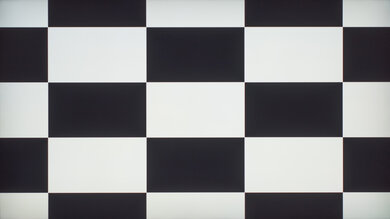
Native Contrast one,144 : 1
Contrast with local dimming ane,200 : 1
The LG NANO90 has a mediocre contrast ratio, which nosotros expect from an IPS panel. Blacks look gray when viewed in the nighttime. The local dimming feature doesn't improve the contrast much with our test design because it seems to turn all the dimming zones on. However, it improves the contrast in existent content; we measured a full-white and a full-blackness screen and got a dissimilarity of 52250:i. This number isn't representative of existent content either merely confirms that the local dimming tin turn off the LED backlighting with a full-blackness screen.
Real Scene Meridian Effulgence 384 cd/m²
Top two% Window 281 cd/m²
Peak 10% Window 392 cd/yard²
Pinnacle 25% Window 427 cd/grand²
Peak 50% Window 437 cd/m²
Peak 100% Window 441 cd/g²
Sustained 2% Window 280 cd/m²
Sustained 10% Window 392 cd/thousand²
Sustained 25% Window 426 cd/g²
Sustained 50% Window 436 cd/yard²
Sustained 100% Window 440 cd/m²
Automatic Effulgence Limiting (ABL) 0.028
The LG NANO90 has good SDR brightness, a prissy comeback from the LG NANO90 2020, but it'south not as bright as the LG QNED90. Information technology gets bright enough with existent content to fight glare in most rooms. Effulgence varies just a flake between our different test windows, and small highlights are dimmer than the residue due to frame dimming.
We tested SDR brightness after calibration in the 'Expert (Dark infinite, night)' Picture Mode with Color Temperature set to 'Warm fifty', LED Local Dimming to 'Medium', and Panel Brightness to its max.
If you want the brightest image possible and don't intendance near image accuracy, nosotros reached 1047 cd/m² in the ten% window in the 'Vivid' Picture Mode.
Local Dimming Yeah
Backlight Full-Array
The LG NANO90 has a poor local dimming feature. It's full-array with 32 dimming zones and nosotros tested it with LED Local Dimming set to 'Medium'. While the local dimming on the LG NANO90 2020 made everything brighter, information technology crushes everything on this year'south model. It over-darkens scenes and causes vivid highlights to lose details. At that place are uniformity issues throughout because in that location's blooming, which is distracting with subtitles. Fast-moving objects don't transition between the dimming zones well, and information technology's obvious when a zone turns on and off. Overall, while the local dimming tin assist amend the contrast, it worsens the moving picture quality. The LG QNED90, with its Mini LED backlight, has a much better local dimming feature.
Local Dimming Yes
Backlight Full-Assortment
The local dimming performs the same in the 'Game Optimizer' Picture Mode every bit outside of it. The color temperature is cooler in the 'Game' mode, so colors expect a bit more vibrant, merely the overall image looks the aforementioned.
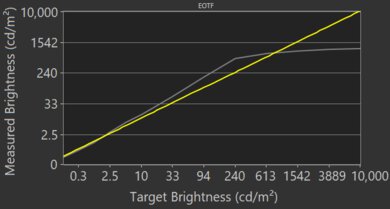
Existent Scene Highlight 549 cd/m²
Peak 2% Window 571 cd/1000²
Peak 10% Window ane,152 cd/chiliad²
Peak 25% Window 912 cd/m²
Acme 50% Window 557 cd/m²
Peak 100% Window 504 cd/m²
Sustained 2% Window 309 cd/m²
Sustained x% Window 442 cd/m²
Sustained 25% Window 476 cd/m²
Sustained 50% Window 496 cd/m²
Sustained 100% Window 503 cd/g²
Automated Effulgence Limiting (ABL) 0.029
The HDR effulgence is decent. It gets brighter than in SDR, and it'south an improvement from the LG NANO90 2020, just it's still not enough to make highlights pop. It gets brightest when modest-to-medium-sized highlights stay on the screen for a short period, but they speedily lose their effulgence the longer they stay on the screen. Once again, really pocket-size highlights are dimmer because of frame dimming. The EOTF doesn't follow the target perfectly as about brilliant scenes are over-brightened.
Nosotros tested information technology in the 'Picture palace' HDR Picture show Style with Panel Effulgence and Dissimilarity at their max, LED Local Dimming set to 'Medium', and Color Temperature on 'Warm 50' with all other image processing disabled.
We couldn't achieve a brighter EOTF plot, just if y'all want the highest luminosity possible at the toll of image accuracy, so apply the 'Vivid' Picture Fashion with LED Local Dimming on 'Medium' and everything else at their default settings. We measured 1309 cd/m² using these settings in the 10% window.
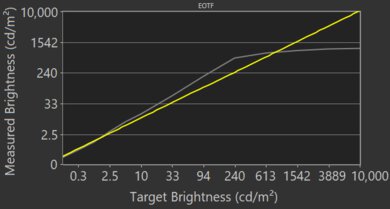
Real Scene Highlight 545 cd/yard²
Peak 2% Window 570 cd/thou²
Elevation 10% Window i,151 cd/chiliad²
Meridian 25% Window 915 cd/m²
Peak fifty% Window 558 cd/chiliad²
Superlative 100% Window 504 cd/m²
Sustained 2% Window 309 cd/m²
Sustained 10% Window 443 cd/chiliad²
Sustained 25% Window 478 cd/yard²
Sustained fifty% Window 497 cd/m²
Sustained 100% Window 504 cd/thousand²
Automatic Brightness Limiting (ABL) 0.029
The HDR effulgence in the 'Game Optimizer' mode is the same as outside of it. The modest differences in measurement are due to variance between testing runs, and you won't meet any difference with your eyes.

l% Std. Dev. 5.509%
50% DSE 0.210%

v% Std. Dev. 0.588%
5% DSE 0.087%
The LG NANO90 has okay gray uniformity. The edges of the screen are visibly darker all around, and there's dirty screen effect in the center, which could get distracting during sports. However, uniformity is improved in about-dark scenes. Continue in listen that uniformity can vary between units.

Native Std. Dev. 1.982%
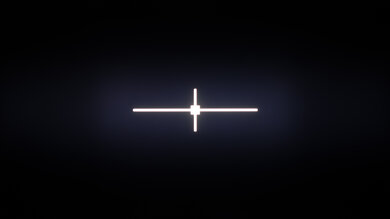
Std. Dev. w/ L.D. ii.836%
The blackness uniformity is disappointing, only this can vary a bit between units. Without local dimming enabled, the entire screen looks purple due to the low dissimilarity. Fifty-fifty with local dimming enabled, the uniformity is worse because there's intense blooming around the center cantankerous.

Color Washout 26°

Color Shift 52°
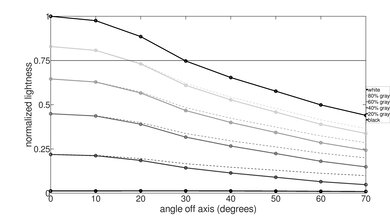
Effulgence Loss 30°
Blackness Level Raise 70°
Gamma Shift thirty°
The LG NANO90 has okay viewing angles, merely information technology's goose egg special for an IPS console. The image speedily starts to expect darker equally you move off-center, and it looks inaccurate at broad viewing angles. It should be fine for watching stuff with a few people around, just probably non suggested for large viewing parties.


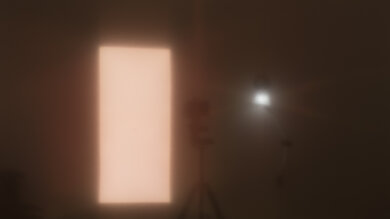
Screen Stop Semi-gloss
Full Reflections iii.1%
Indirect Reflections 0.9%
Calculated Direct Reflections ii.2%
The LG NANO90 2021 has impressive reflection handling. It handles even intense light pretty well, and combined with its good tiptop brightness, glare shouldn't be an effect in most settings. Information technology looks like information technology has a unlike blanket from the LG NANO90 2020 equally light looks more royal when reflected off, similar to the LG C1 OLED.


White Balance dE 7.19
Color dE 6.29
Gamma 1.63
Color Temperature 7,319 K
Motion-picture show Fashion Adept (Nighttime Space)
Color Temp Setting Warm 50
Gamma Setting 2.ii
The out-of-the-box accurateness is terrible. Although this can vary between units, we noticed similar behavior on the LG C1 OLED. Nosotros measured it with different equipment and kept getting the aforementioned results. White rest and colors are manner off; yellow colors wait more white than the actual color white. Gamma is awful, and all scenes are too bright, especially brighter scenes. Color temperature is as well on the absurd side, giving the paradigm a blue tint. Also annotation that we disabled LED Local Dimming for the measurements.
We too tried measuring the accurateness in the 'Filmmaker Fashion' Film Mode and got slightly ameliorate, merely similar, results. However, we don't suggest using this considering it disables some settings:
- White Rest dE: 6.84
- Color dE: half dozen.12
- Color Temperature: 7332K
- Gamma: 1.68


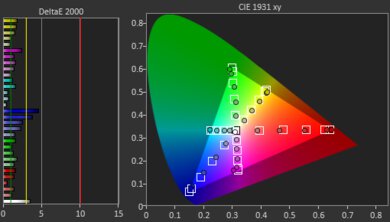
White Residue dE 0.43
Color dE 1.67
Gamma two.20
Color Temperature 6,762 G
White Balance Scale 22 bespeak
Color Scale Yes
Accurateness afterwards scale is fantastic. Whatever remaining inaccuracies to the white balance and colors are near impossible to spot. Gamma follows the target almost perfectly, and the color temperature is closer to our 6500K target.
Run into our recommended settings here.

The LG NANO90 upscales 480p content, similar from DVDs, without issue.

There aren't whatsoever artifacts with upscaled 720p content.

This TV upscales 1080p content like from Blu-rays very well.

The LG NANO90 displays a perfect 4k image, and in that location aren't any obvious problems.
This is a 4k TV that tin't brandish an 8k betoken. If you lot want a Goggle box that does, then cheque out the LG NANO99 8k 2021.
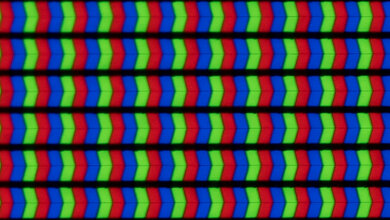
The LG NANO90 2021 uses a proper IPS panel but with a BGR sub-pixel layout. This doesn't affect the overall movie simply may have an effect on the way text is displayed. Read nigh information technology here.
Wide Color Gamut No
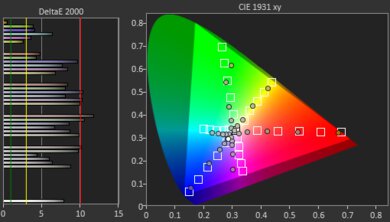
DCI P3 xy 81.62%
DCI P3 uv 90.44%
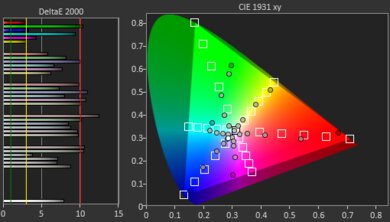
Rec 2020 xy 58.77%
Rec 2020 uv 66.32%
The LG NANO90 has a decent colour gamut for HDR content. It'south technically not considered a wide color gamut co-ordinate to our testing standards considering information technology doesn't see the 67% Rec. 2020 uv coverage, but information technology's not far off. Luckily, it has fantabulous coverage of the DCI P3 colour space used in most HDR content. Due to the bad colour accuracy, tone mapping is also off. This results in the image looking cooler than expected, but information technology however looks expert overall.
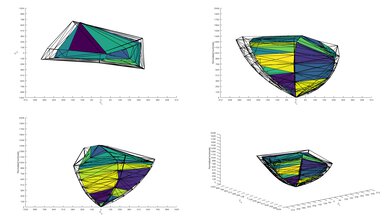
Normalized DCI P3 Coverage ITP 72.9%
10,000 cd/m² DCI P3 Coverage ITP 36.8%
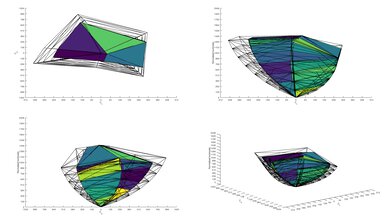
Normalized Rec 2020 Coverage ITP 56.1%
10,000 cd/chiliad² Rec 2020 Coverage ITP 28.three%
Due to the lack of wide color gamut, the color volume is merely okay. Information technology struggles to display dark colors because of its low dissimilarity but does a meliorate job with brighter colors.
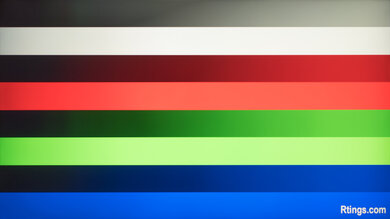
Colour Depth 10 Flake
Red (Std. Dev.) 0.086
Green (Std. Dev.) 0.095
Blueish (Std. Dev.) 0.076
Greyness (Std. Dev.) 0.099
The gradient handling is excellent. There'southward banding in the grays and greens, just it's non very noticeable. Setting Smooth Gradiation to 'Medium' or 'High' helps reduce any banding, just that comes at the price of losing fine details.

IR after 0 min recovery 0.09%
IR after 2 min recovery 0.00%
IR after 4 min recovery 0.00%
IR afterwards half-dozen min recovery 0.00%
IR after eight min recovery 0.00%
IR after 10 min recovery 0.00%
There are some very small signs of prototype memory after displaying a high-contrast static image for ten minutes. It's hard to discover, it disappears apace, and this tin also vary between units.
Permanent Fire-In Risk No
While some IPS panels like this take some temporary image memory, this doesn't seem to be permanent equally the IPS panel in our long-term test appears to be immune.
Movement


80% Response Time three.ix ms
100% Response Time xiii.2 ms
The LG NANO90 2021 has a bang-up response time. Yous may nevertheless observe some blur trail behind fast-moving objects, but motion still looks practiced overall. At that place's some pocket-sized overshoot in near transitions, but it's nothing to worry about.

Flicker-Free No
PWM Dimming Frequency 960 Hz
This Telly uses Pulse Width Modulation (PWM) to dim its backlight. The flickering starts when the Panel Brightness is set to anything below its max, just the frequency is so high that you lot shouldn't notice it. All the same, it flickers at 120Hz in the 'Game Optimizer' Picture Mode.

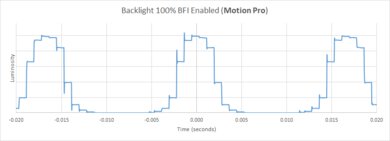
Optional BFI Aye
Min Flicker For 60 fps 60 Hz
60Hz For lx fps Yes
120Hz For 120 fps Yes
Min Flicker for 60 fps in Game Mode 60 Hz
The LG NANO90 has a Black Frame Insertion feature to try to improve the appearance of movement. It works for both 60fps and 120fps content, merely it can create some paradigm duplication. Go on in mind that the BFI score is based on the frequency at which the Boob tube can flicker and non the actual performance.
Encounter hither for the settings that control the BFI feature.

Motion Interpolation (30 fps) Yeah

Move Interpolation (60 fps) Yes
In that location'south a motion interpolation feature for lower frame rate content, known as the 'Soap Opera Effect'. It can interpolate 60fps up to 120fps, and information technology can interpolate 30fps upward to 60fps, but information technology tin can't do it up to 120fps, which explains the blurriness of the pinnacle photo. With real content, the motion interpolation characteristic doesn't look that skilful. There are a few artifacts and move blur with anything that's moving. Information technology even stops interpolating birthday during busy scenes.
See hither for the settings that command the motion interpolation feature.
Frame Hold Fourth dimension @ 24 fps 28.5 ms
Frame Agree Time @ 60 fps 3.5 ms
Despite the quick response fourth dimension, lower frame rate content doesn't stutter that much. If it bothers you, y'all can attempt enabling the motility interpolation feature.
Judder-Free 24p Yes
Judder-Free 24p via 60p Yes
Judder-Complimentary 24p via 60i Aye
Judder-Complimentary 24p via Native Apps Yes
The LG NANO90 2021 can remove 24p judder from any source. For information technology to work, but enable Cinema Screen.
Native Refresh Rate 120 Hz
Variable Refresh Rate Yes
HDMI Forum VRR Aye
FreeSync Yeah
1000-SYNC Compatible Yeah
4k VRR Maximum 120 Hz
4k VRR Minimum < 20 Hz
1080p VRR Maximum 120 Hz
1080p VRR Minimum < twenty Hz
1440p VRR Maximum 120 Hz
1440p VRR Minimum < 20 Hz
VRR Supported Connectors HDMI
The LG NANO90 has native FreeSync and HDMI Forum VRR support to reduce screen vehement. On our unit, we set the AMD FreeSync Premium to 'Loftier' to get the full refresh rate range with FreeSync considering setting it to 'Broad' limits it to 60Hz. Although it's non officially certified to be G-SYNC compatible, we constitute it works with our RTX 3080 graphics card, but it doesn't work with whatsoever 1000 Series card. Enabling the VRR setting likewise disabled the LED Local Dimming, TruMotion, Dissonance Reduction, and Smoothen Gradation settings.
Inputs
1080p @ 60Hz 11.half-dozen ms
1080p @ 60Hz Outside Game Way 129.9 ms
1440p @ 60Hz 11.6 ms
4k @ 60Hz xi.5 ms
4k @ 60Hz + 10-Chip HDR 11.iv ms
4k @ 60Hz @ 4:4:4 11.5 ms
4k @ 60Hz Outside Game Way 109.1 ms
4k @ 60Hz With Interpolation 103.8 ms
8k @ 60Hz Northward/A
1080p @ 120Hz 5.1 ms
1440p @ 120Hz 5.0 ms
4k @ 120Hz 5.2 ms
1080p with Variable Refresh Rate five.4 ms
1440p with VRR five.6 ms
4k with VRR five.8 ms
8k with VRR North/A
The LG NANO90 2021 has incredibly low input lag as long equally information technology's in the 'Game Optimizer' Picture Manner. LG introduced a new Prevent Input Delay setting to their 2021 TVs, and setting it to 'Boost' reduces the input lag by about 3ms for 60Hz content compared to the LG NANO90 2020. However, it doesn't touch on anything with 120Hz content. Sadly, enabling the motility interpolation characteristic in 'Game' mode greatly increases the input lag, so it's not suggested for gaming.
1080p @ 60Hz @ 4:4:4 Yes
1080p @ 120Hz Yeah (native back up)
1440p @ 60Hz Aye (forced resolution required)
1440p @ 120Hz Yes (native support)
4k @ 60Hz Yeah
4k @ 60Hz @ four:4:4 Yes
4k @ 120Hz Yes (native support)
8k @ 30Hz or 24Hz No
8k @ 60Hz No
Update xi/24/2021: We double-checked to make certain that this Telly could display 4k @ 120Hz signals properly. Dissimilar TVs from other brands, including the Sony X90J and the Hisense U8G, LG doesn't employ the MediaTek chipset and has no issues displaying 4k @ 120Hz.
The LG NANO90 TV displays any mutual indicate up to 4k @ 120Hz. It displays proper blush four:four:4 on whatsoever supported resolution, which is of import for reading fine text when using it as a PC monitor. For it to work, set the icon for the input you're using to 'PC' in the Abode Dashboard. For full-bandwidth signals, set HDMI Deep Colour to '4k'.

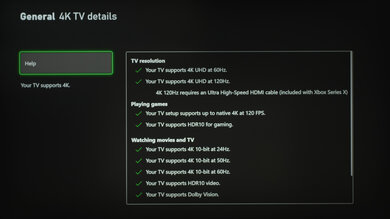
Motorcar Low Latency Mode (ALLM) Yes
PS5, 4k @ 120Hz + HDR Aye
PS5, 4k @ 120Hz Yes
PS5, 4k @ 60Hz + HDR Yeah
PS5, 1440p @ 120Hz PS5 can't exercise 1440p
PS5, 1080p @ 120Hz Aye
PS5, Variable Refresh Rate PS5 tin't do VRR all the same
Xbox Series X, 4k @ 120Hz + HDR Yes
Xbox Series X, 4k @ 120Hz Yes
Xbox Series X, 4k @ 60Hz + HDR Yes
Xbox Series X, 1440p @ 120Hz Yes
Xbox Series 10, 1080p @ 120Hz Aye
Xbox Serial Ten, Variable Refresh Rate Yep
The LG NANO90 2021 doesn't have any problems displaying content from either the PS5 or Xbox Series 10. It has Auto Low Latency Way that automatically switches the TV into 'Game' way when a game from a compatible device is launched. For it to work, simply enable Game Optimizer in the General Settings page.
HDR10 Yes
HDR10+ No
Dolby Vision Yep
HLG Yes
HDMI 2.0 Full Bandwidth Yep (HDMI 1,2,3,4)
HDMI 2.1 Course Bandwidth Yes (HDMI three,4)
CEC Yes
HDCP two.ii Yes (HDMI 1,2,three,4)
USB 3.0 No
Variable Analog Audio Out No
Wi-Fi Support Yes (2.4 GHz, five GHz)
Since HDMI 3 is besides the ARC input, yous may only be left with one HDMI 2.one input (HDMI 4) if you demand to connect a receiver.


All HDMI inputs are side-facing, making them easier to access if y'all wall-mountain the TV.
HDMI 4
USB 3
Digital Optical Audio Out 1
Analog Audio Out 3.5mm 0
Analog Audio Out RCA 0
Component In 0
Blended In 0
Tuner (Cablevision/Ant) i
Ethernet 1
DisplayPort 0
IR In 0
SD/SDHC 0
ARC Aye (HDMI 3)
eARC support Yes
Dolby Atmos via TrueHD via eARC Aye
DTS:X via DTS-Hd MA via eARC No
5.1 Dolby Digital via ARC Yeah
5.i DTS via ARC No
5.1 Dolby Digital via Optical Aye
v.ane DTS via Optical No
The LG NANO90 supports eARC, allowing you to pass high-quality, uncompressed sound to a compatible receiver over an HDMI connection. Information technology supports Dolby Digital audio formats, but non DTS. For it to piece of work, set the HDMI Input Audio to 'Bitstream' for the input you're using, Digital Sound Output to 'Machine', and enable HDMI e-ARC Support.
Audio Quality
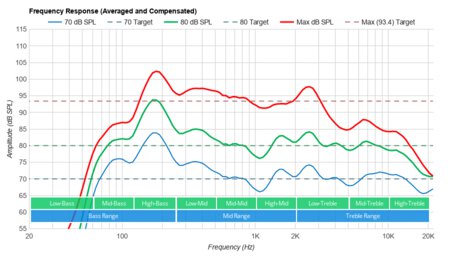
Low-Frequency Extension 71.27 Hz
Std. Dev. @ 70 iii.81 dB
Std. Dev. @ 80 3.83 dB
Std. Dev. @ Max 5.thirty dB
Max 93.4 dB SPL
Dynamic Range Compression 5.06 dB
The LG NANO90 2021 has a decent frequency response. It has a well-balanced sound contour that makes dialogue audio practiced. In our testing, any frequency above 11KHz sounded awful, but nearly content won't achieve this high pitch anyways. In that location'due south a decent amount of bass with a bit of thump, merely it'due south nevertheless non as good as a dedicated subwoofer.
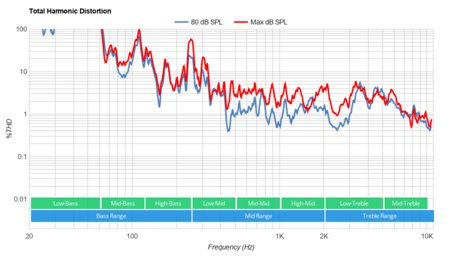
Weighted THD @ lxxx 0.658
Weighted THD @ Max 2.144
IMD @ lxxx four.32%
IMD @ Max 46.38%
The distortion performance is disappointing. In that location isn't also much distortion at moderate listening levels, but information technology gets more noticeable when playing content at its max volume. However, this depends on the content, and not everyone may hear it.
Smart Features
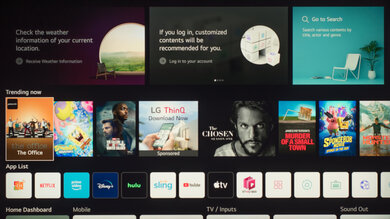
Smart Os WebOS
Version 6.0
Ease of Use Piece of cake
Smoothness Boilerplate
Time Taken to Select YouTube 2 southward
Time Taken to Change Backlight 7 s
Avant-garde Options Many
LG redesigned the webOS in 2021, and you go a full home page with all your apps instead of the banner that was at the bottom on previous versions. Information technology's easy-to-use, and the card navigation feels adequately smooth. We didn't detect whatever bugs during testing.

Ads Yes
Opt-out No
Suggested Content in Home Yeah
Opt-out of Suggested Content No
Like most mod TVs, there are ads on the home page. They even take a dedicated 'ads page' where you tin can shop for all of their advertised products.
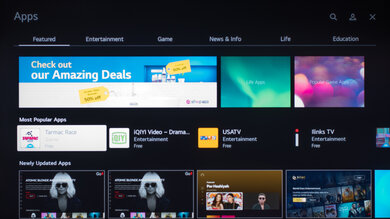
App Option Swell
App Smoothness Average
Bandage Capable Yes
USB Drive Playback Yes
USB Drive HDR Playback Aye
HDR in Netflix Yes
HDR in YouTube Yes
LG's app store has a wide selection, and the apps run smoothly.

Size Big
Voice Control Many Features
CEC Menu Control Yes
Other Smart Features Yeah
Remote App LG Tv set Plus
LG'due south popular Magic Remote has been redesigned in 2021. Instead of the curved shape we've go used to in the by years, information technology's at present flat with more quick-access buttons to Netflix, Amazon Prime number Video, Disney+, and the app store. It has the same functions as past Magic Remotes equally you can use it with its traditional buttons or employ the motion-controlled arrow, like a Wii remote. Through the born microphone, you have access to both Google Assistant and Alexa, and yous can ask it to modify inputs and search for content, but you can't ask it to change settings.
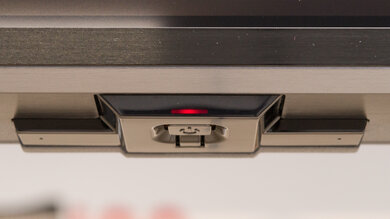
There'due south a unmarried push underneath the eye of the TV to turn information technology On/Off, change inputs, adjust the volume, or switch channels.
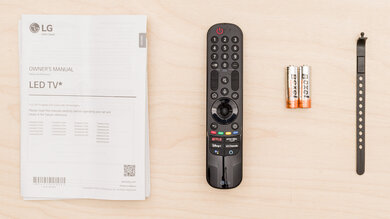
- Remote
- 2x AA batteries
- User guides
- Cable tie
- Not shown: Clips and feet covers for cable direction
Power Consumption 93 W
Power Consumption (Max) 198 Westward
Firmware 03.ten.33
Source: https://www.rtings.com/tv/reviews/lg/nano90-2021

Post a Comment for "Is Lg 555m8600pua Nano 8 Series Tech Review"